Is an Older Unit Ready for Another Summer in Eltham?
Find out whether your older air conditioner is ready for another Eltham summer, with practical checks on performance, repairs and replacement options.

Why you can trust our content
Our team is fully trained, qualified and highly experienced in the air conditioning industry.

Frequently Asked Questions
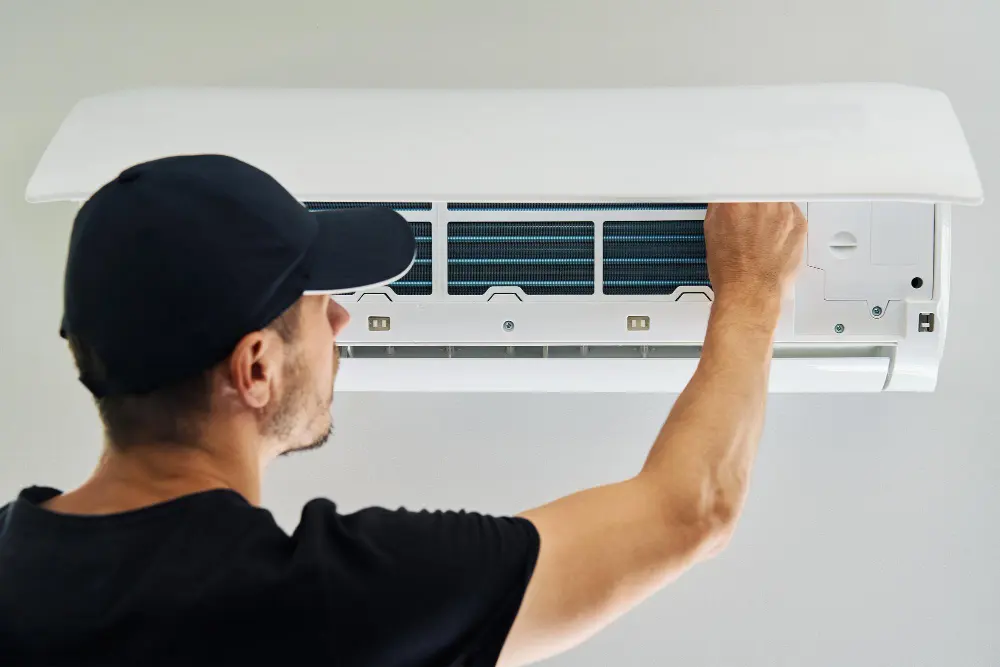
An air conditioning system can seem perfectly adequate during mild weather, only to struggle when the first sustained spell of summer heat arrives. Perhaps the living room takes longer to cool than it used to, the bedroom remains stuffy overnight, or the unit makes a noise that was not noticeable last year.
These changes do not automatically mean your equipment needs replacing. However, they are worth investigating before warmer weather places greater demands on the system. Identifying wear, maintenance needs and performance problems early gives you more time to decide what makes sense for your home and budget.
For homeowners assessing an air conditioner in Eltham, the key question is not simply how old the unit is. Its condition, reliability, running performance and ability to cool the intended space are all important when deciding whether it is ready for another summer.
How do you know whether an older air conditioner is still working properly?
An older air conditioning unit may continue to provide reliable cooling for years if it has been correctly installed, maintained and used. There is no single age at which every system should be replaced.
Instead, look for changes in performance. If your equipment now takes considerably longer to cool a room, struggles during ordinary warm weather or frequently switches itself off, it may need attention.
Consider these signs:
- Slower cooling: Rooms take longer to reach a comfortable temperature than they did previously.
- Uneven temperatures: One part of the room feels cool while another remains noticeably warm.
- Increasing noise: Rattling, grinding or persistent buzzing may indicate a developing fault.
- Repeated breakdowns: Frequent repair visits can suggest that components are wearing out.
- Unexpected water leaks: Moisture around an indoor unit may indicate a drainage problem.
- Unusual running patterns: The system may cycle frequently or operate for long periods without providing the expected comfort.
None of these symptoms confirms that replacement is necessary. Dirty filters, obstructed airflow, incorrect settings and maintenance issues can sometimes explain disappointing performance.
Does the age of your air conditioning unit matter?
Age is useful context, but it should not be the only factor in your decision. Two units installed in the same year may be in very different condition because of differences in usage, maintenance, installation quality and operating environment.
A system used occasionally in a well-insulated room may experience a different workload from one expected to cool a sun-facing room every day. Regular servicing and prompt attention to minor faults can also influence how well equipment performs over time.
When assessing an older unit, consider the following:
| Factor | What to look for | Why it matters |
|---|---|---|
| Maintenance history | Regular servicing and filter care | Helps establish whether routine upkeep has been completed |
| Cooling performance | Consistent temperatures and reasonable cooling times | Shows whether the system still meets household needs |
| Repair history | Frequency and cost of previous faults | Helps assess the likely value of further repairs |
| Operating noise | Changes from the unit’s normal sound | May reveal a developing mechanical problem |
| Parts availability | Whether suitable replacement components can be obtained | Can affect repair practicality and waiting times |
| Energy performance | Electricity use alongside operating hours and cooling demand | Helps assess the overall cost of running the system |
If the unit is ageing but remains dependable, a service and performance assessment may be all that is needed. If it repeatedly fails or no longer cools the room effectively, discussing replacement may be more sensible.
What checks can you carry out before calling an installer?
There are several simple checks homeowners can perform without opening the equipment or attempting technical repairs.
Check the filter
A clogged filter can restrict airflow and affect cooling performance. Follow the manufacturer’s instructions to clean or replace accessible filters. Washable filters should be completely dry before they are reinstalled.
Check the thermostat
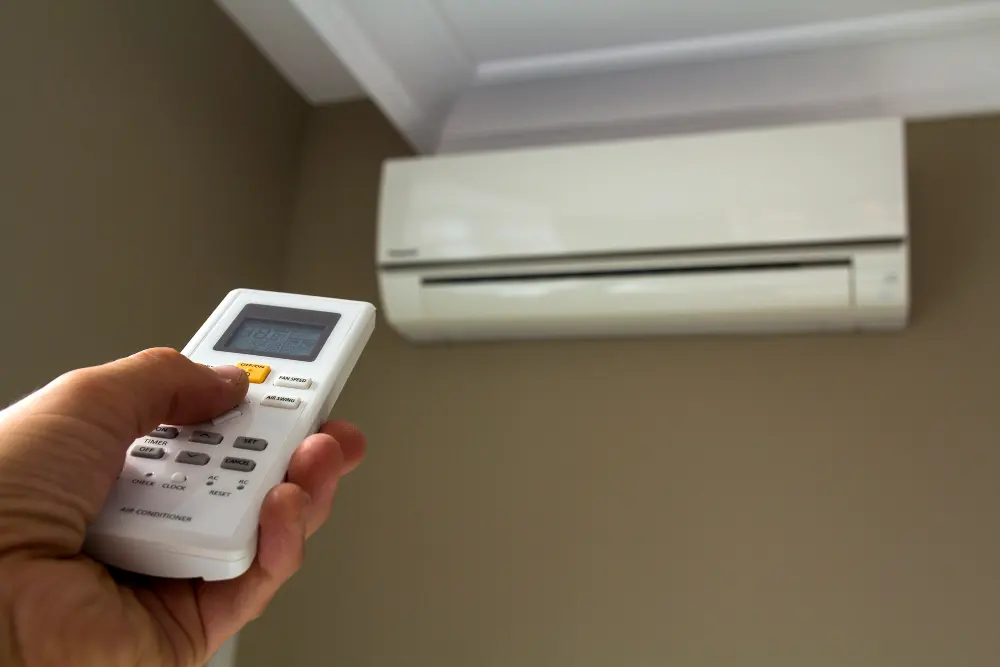
Make sure the system is set to cooling mode and that the target temperature is appropriate. Check whether a timer or programmed schedule is affecting operation.
Inspect the airflow
Ensure that curtains, furniture and other objects are not blocking the indoor unit’s air outlet. Outside, keep the area around the outdoor unit clear of loose debris and vegetation, following the manufacturer’s clearance guidance.
Listen during operation
Pay attention to unusual sounds that persist or differ from the unit’s normal operating noise. Do not remove covers to investigate internal components.
Look for visible leaks
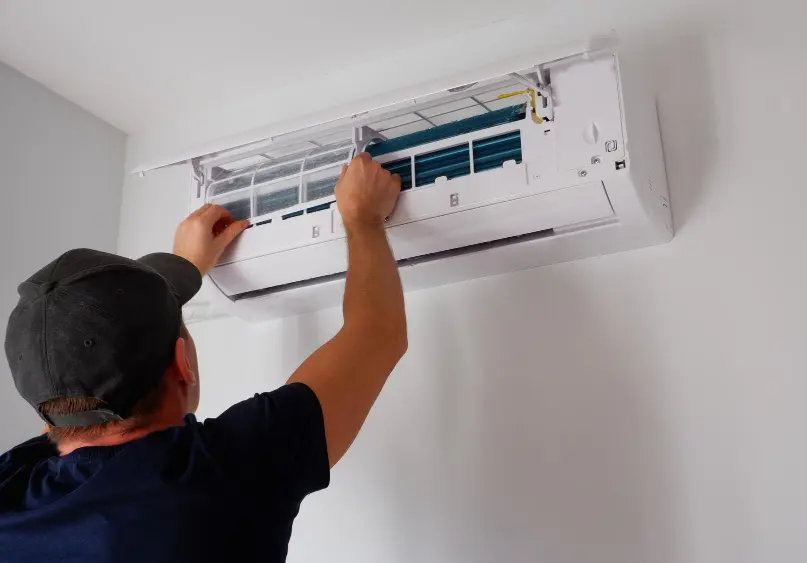
Water beneath the indoor unit or damp patches nearby should not be ignored. Switch off a leaking system if necessary and arrange professional advice, particularly if moisture is near electrical components.
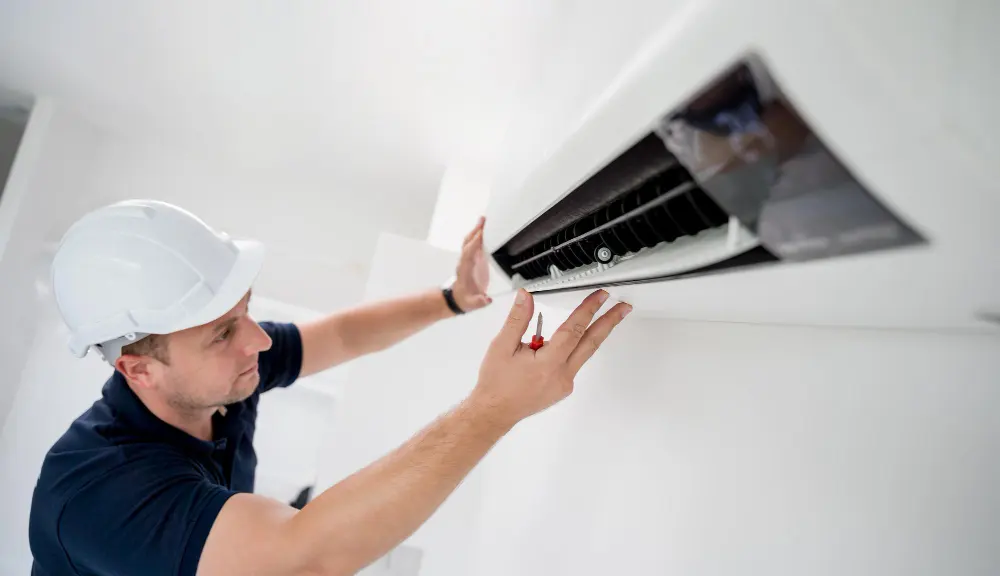
If these basic checks do not resolve the problem, a qualified technician can investigate further and determine whether the cause is routine maintenance, a repair or a more significant fault.
If your existing unit is showing signs of wear, contact JK Cooling Solutions to discuss a professional assessment before the summer demand increases.
When is repairing an older unit the sensible option?
Repair can be a practical choice when the fault is straightforward, suitable parts are available and the system still meets your cooling requirements.
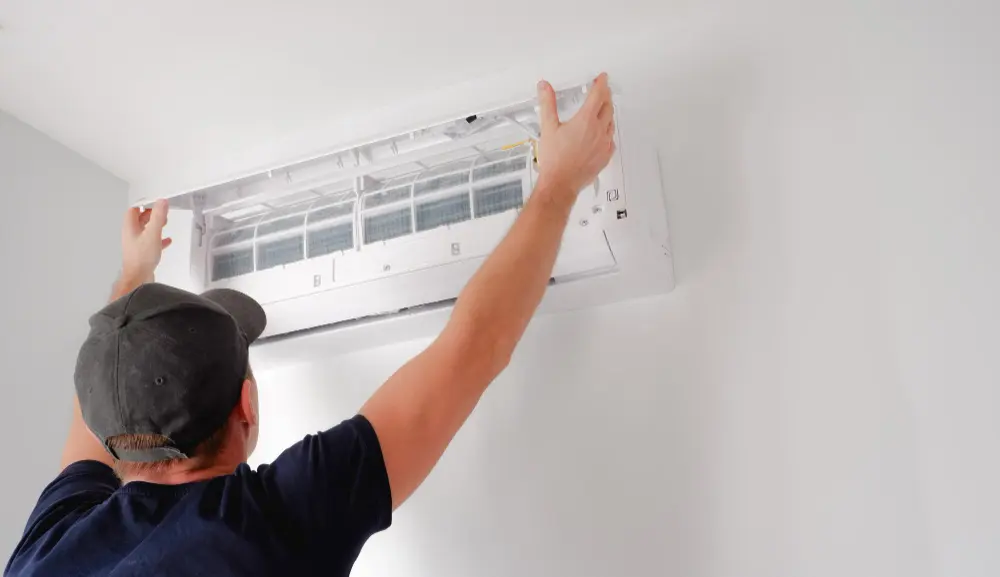
For example, an older wall-mounted unit in a small bedroom may continue to work well after a relatively simple repair. If the rest of the equipment is in good condition, replacing the entire system might not be necessary.
Before agreeing to repair work, ask the technician to explain the fault, the recommended solution and the likely total cost. It is also worth discussing whether the repair is expected to resolve the problem or whether other components are showing signs of deterioration.
Repair is often worth considering when:
- The system has been reliable apart from an isolated fault.
- The equipment still cools the intended room adequately.
- The repair cost is reasonable in relation to the unit’s overall condition.
- Replacement parts are available without an unreasonable delay.
- The expected benefits justify the cost of the work.
However, a low repair quote does not always mean repair is the best long-term decision. If the same problem keeps returning, the wider condition of the equipment deserves closer attention.
When should you consider a new air conditioner?
Replacement becomes more attractive when an existing system no longer provides dependable cooling or when ongoing repairs are becoming difficult to justify.
A new air conditioner may also be worth considering if your household’s needs have changed. Perhaps a room has been converted into a home office, a bedroom is now used throughout the day, or renovations have altered the way heat moves through the property.
Before choosing replacement, consider whether the new equipment will address the original problem. If the existing unit was incorrectly sized or poorly positioned, installing a similar model in the same location may not deliver the improvement you expect.
A suitable assessment should take account of room dimensions, window exposure, insulation, occupancy and the intended use of each space.
When comparing options, ask about:
- The recommended cooling capacity and why it suits the room.
- The expected installation work and any electrical requirements.
- The equipment’s energy performance information.
- The manufacturer’s warranty and maintenance recommendations.
- Removal of the old unit and any additional installation charges.
- Commissioning and instructions for using the new equipment.
If replacement looks like the better option, speak to JK Cooling Solutions about suitable equipment and request a quote based on your property’s requirements.
How can you compare the cost of repair and replacement?
The cheapest immediate option is not necessarily the most economical over several years. Equally, replacing an older unit purely because a newer model is available may not offer good value if the existing equipment is still reliable.
A balanced comparison should include the cost of the proposed repair, the condition of the remaining components, likely maintenance needs and the cost of a replacement installation.
| Consideration | Repair the existing unit | Install a replacement |
|---|---|---|
| Initial expenditure | Usually limited to diagnosis and the required repair | Includes new equipment and installation |
| Existing installation | Most of the current setup remains in place | May require new pipework, electrical work or other changes |
| Future reliability | Depends on the overall condition of the older equipment | Depends on product quality, installation and ongoing care |
| Energy use | Depends on the unit’s current performance and condition | Depends on the replacement model and how it is operated |
| Disruption | Often limited, depending on the repair | May involve more extensive work and temporary disruption |
| Long-term suitability | Appropriate if the system still meets your needs | Offers an opportunity to reassess capacity and room requirements |
Ask for a clear, itemised quotation so you can compare like with like. Energy savings should not be assumed without considering the old and new systems, operating habits and actual cooling requirements.
Why is it worth making a decision before summer?
Waiting until a heatwave arrives can leave you with fewer convenient appointment options and less time to compare recommendations. If replacement is necessary, the installation may involve equipment selection, a site assessment and preparation work before the system can be commissioned.
Planning early is particularly useful if the existing unit has a history of faults or if certain rooms are already uncomfortable during mild weather.
It also gives you time to consider practical details such as the outdoor unit’s location, access for installation, noise near neighbouring properties and any necessary electrical work.
There is no guarantee that early booking will always reduce the price, but it can make the process less rushed. You can ask questions, review the proposed work and make a decision based on the needs of your property rather than immediate discomfort.
Related articles


What type of property do you have?

Semi-Detached
Detached

Terraced

Bungalow

Flat

Commercial or Small Office
Frequently Asked Questions
An air conditioning system can seem perfectly adequate during mild weather, only to struggle when the first sustained spell of summer heat arrives. Perhaps the living room takes longer to cool than it used to, the bedroom remains stuffy overnight, or the unit makes a noise that was not noticeable last year.
These changes do not automatically mean your equipment needs replacing. However, they are worth investigating before warmer weather places greater demands on the system. Identifying wear, maintenance needs and performance problems early gives you more time to decide what makes sense for your home and budget.
For homeowners assessing an air conditioner in Eltham, the key question is not simply how old the unit is. Its condition, reliability, running performance and ability to cool the intended space are all important when deciding whether it is ready for another summer.
How do you know whether an older air conditioner is still working properly?
An older air conditioning unit may continue to provide reliable cooling for years if it has been correctly installed, maintained and used. There is no single age at which every system should be replaced.
Instead, look for changes in performance. If your equipment now takes considerably longer to cool a room, struggles during ordinary warm weather or frequently switches itself off, it may need attention.
Consider these signs:
- Slower cooling: Rooms take longer to reach a comfortable temperature than they did previously.
- Uneven temperatures: One part of the room feels cool while another remains noticeably warm.
- Increasing noise: Rattling, grinding or persistent buzzing may indicate a developing fault.
- Repeated breakdowns: Frequent repair visits can suggest that components are wearing out.
- Unexpected water leaks: Moisture around an indoor unit may indicate a drainage problem.
- Unusual running patterns: The system may cycle frequently or operate for long periods without providing the expected comfort.
None of these symptoms confirms that replacement is necessary. Dirty filters, obstructed airflow, incorrect settings and maintenance issues can sometimes explain disappointing performance.
Does the age of your air conditioning unit matter?
Age is useful context, but it should not be the only factor in your decision. Two units installed in the same year may be in very different condition because of differences in usage, maintenance, installation quality and operating environment.
A system used occasionally in a well-insulated room may experience a different workload from one expected to cool a sun-facing room every day. Regular servicing and prompt attention to minor faults can also influence how well equipment performs over time.
When assessing an older unit, consider the following:
| Factor | What to look for | Why it matters |
|---|---|---|
| Maintenance history | Regular servicing and filter care | Helps establish whether routine upkeep has been completed |
| Cooling performance | Consistent temperatures and reasonable cooling times | Shows whether the system still meets household needs |
| Repair history | Frequency and cost of previous faults | Helps assess the likely value of further repairs |
| Operating noise | Changes from the unit’s normal sound | May reveal a developing mechanical problem |
| Parts availability | Whether suitable replacement components can be obtained | Can affect repair practicality and waiting times |
| Energy performance | Electricity use alongside operating hours and cooling demand | Helps assess the overall cost of running the system |
If the unit is ageing but remains dependable, a service and performance assessment may be all that is needed. If it repeatedly fails or no longer cools the room effectively, discussing replacement may be more sensible.
What checks can you carry out before calling an installer?
There are several simple checks homeowners can perform without opening the equipment or attempting technical repairs.
Check the filter
A clogged filter can restrict airflow and affect cooling performance. Follow the manufacturer’s instructions to clean or replace accessible filters. Washable filters should be completely dry before they are reinstalled.
Check the thermostat
Make sure the system is set to cooling mode and that the target temperature is appropriate. Check whether a timer or programmed schedule is affecting operation.
Inspect the airflow
Ensure that curtains, furniture and other objects are not blocking the indoor unit’s air outlet. Outside, keep the area around the outdoor unit clear of loose debris and vegetation, following the manufacturer’s clearance guidance.
Listen during operation
Pay attention to unusual sounds that persist or differ from the unit’s normal operating noise. Do not remove covers to investigate internal components.
Look for visible leaks
Water beneath the indoor unit or damp patches nearby should not be ignored. Switch off a leaking system if necessary and arrange professional advice, particularly if moisture is near electrical components.
If these basic checks do not resolve the problem, a qualified technician can investigate further and determine whether the cause is routine maintenance, a repair or a more significant fault.
If your existing unit is showing signs of wear, contact JK Cooling Solutions to discuss a professional assessment before the summer demand increases.
When is repairing an older unit the sensible option?
Repair can be a practical choice when the fault is straightforward, suitable parts are available and the system still meets your cooling requirements.
For example, an older wall-mounted unit in a small bedroom may continue to work well after a relatively simple repair. If the rest of the equipment is in good condition, replacing the entire system might not be necessary.
Before agreeing to repair work, ask the technician to explain the fault, the recommended solution and the likely total cost. It is also worth discussing whether the repair is expected to resolve the problem or whether other components are showing signs of deterioration.
Repair is often worth considering when:
- The system has been reliable apart from an isolated fault.
- The equipment still cools the intended room adequately.
- The repair cost is reasonable in relation to the unit’s overall condition.
- Replacement parts are available without an unreasonable delay.
- The expected benefits justify the cost of the work.
However, a low repair quote does not always mean repair is the best long-term decision. If the same problem keeps returning, the wider condition of the equipment deserves closer attention.
When should you consider a new air conditioner?
Replacement becomes more attractive when an existing system no longer provides dependable cooling or when ongoing repairs are becoming difficult to justify.
A new air conditioner may also be worth considering if your household’s needs have changed. Perhaps a room has been converted into a home office, a bedroom is now used throughout the day, or renovations have altered the way heat moves through the property.
Before choosing replacement, consider whether the new equipment will address the original problem. If the existing unit was incorrectly sized or poorly positioned, installing a similar model in the same location may not deliver the improvement you expect.
A suitable assessment should take account of room dimensions, window exposure, insulation, occupancy and the intended use of each space.
When comparing options, ask about:
- The recommended cooling capacity and why it suits the room.
- The expected installation work and any electrical requirements.
- The equipment’s energy performance information.
- The manufacturer’s warranty and maintenance recommendations.
- Removal of the old unit and any additional installation charges.
- Commissioning and instructions for using the new equipment.
If replacement looks like the better option, speak to JK Cooling Solutions about suitable equipment and request a quote based on your property’s requirements.
How can you compare the cost of repair and replacement?
The cheapest immediate option is not necessarily the most economical over several years. Equally, replacing an older unit purely because a newer model is available may not offer good value if the existing equipment is still reliable.
A balanced comparison should include the cost of the proposed repair, the condition of the remaining components, likely maintenance needs and the cost of a replacement installation.
| Consideration | Repair the existing unit | Install a replacement |
|---|---|---|
| Initial expenditure | Usually limited to diagnosis and the required repair | Includes new equipment and installation |
| Existing installation | Most of the current setup remains in place | May require new pipework, electrical work or other changes |
| Future reliability | Depends on the overall condition of the older equipment | Depends on product quality, installation and ongoing care |
| Energy use | Depends on the unit’s current performance and condition | Depends on the replacement model and how it is operated |
| Disruption | Often limited, depending on the repair | May involve more extensive work and temporary disruption |
| Long-term suitability | Appropriate if the system still meets your needs | Offers an opportunity to reassess capacity and room requirements |
Ask for a clear, itemised quotation so you can compare like with like. Energy savings should not be assumed without considering the old and new systems, operating habits and actual cooling requirements.
Why is it worth making a decision before summer?
Waiting until a heatwave arrives can leave you with fewer convenient appointment options and less time to compare recommendations. If replacement is necessary, the installation may involve equipment selection, a site assessment and preparation work before the system can be commissioned.
Planning early is particularly useful if the existing unit has a history of faults or if certain rooms are already uncomfortable during mild weather.
It also gives you time to consider practical details such as the outdoor unit’s location, access for installation, noise near neighbouring properties and any necessary electrical work.
There is no guarantee that early booking will always reduce the price, but it can make the process less rushed. You can ask questions, review the proposed work and make a decision based on the needs of your property rather than immediate discomfort.
Related articles
What type of property do you have?
Semi-Detached
Detached
Terraced
Bungalow
Flat
Commercial or Small Office