Preventing Emergency Callouts in Heat-and-Cool Commercial Systems
Regular air conditioning maintenance can help businesses identify developing faults, maintain reliable heating and cooling, and reduce the risk of unexpected disruption. From filters and drainage to electrical components and airflow, planned servicing can support better system performance and help manage emergency air con costs.

Why you can trust our content
Our team is fully trained, qualified and highly experienced in the air conditioning industry.

At a glance
For a business, an air conditioning fault rarely happens at a convenient time. A system may stop cooling during a busy summer afternoon, fail to provide heating during a cold morning or develop a problem just when the premises is full of customers and staff.
Emergency repairs can be disruptive, particularly when the system is responsible for both heating and cooling. However, many avoidable problems can be reduced through sensible maintenance, correct operation and early attention to warning signs.
Understanding what causes commercial air conditioning problems can help business owners take action before a minor issue develops into a more disruptive failure.
Why do commercial air conditioning systems need regular attention?
Air conditioning systems contain mechanical, electrical and refrigeration components that work together to provide heating and cooling.
Commercial equipment may operate for long periods, particularly during hot or cold weather. Dust, restricted airflow, blocked drainage and general wear can gradually affect performance.
Regular attention can help identify problems such as:
A maintenance routine does not guarantee that a system will never fail, but it can reduce the likelihood of some preventable problems and provide an opportunity to identify developing faults.
If your commercial air conditioning is becoming unreliable, JK Cooling Solutions can assess the system and advise on appropriate maintenance or repairs. Contact our team before a minor issue becomes a major disruption.
What are the warning signs of an air conditioning problem?
A system does not always fail suddenly.
In many cases, there are warning signs that something is not working as it should.
Watch for:
- Cooling or heating that takes longer than usual
- Unusual smells
- Strange noises
- Water appearing around indoor units
- Weak airflow
- Frequent cycling on and off
- Temperature differences between rooms
- Unexpected increases in energy use
- Controls that do not respond properly
- Repeated fault messages
A change in performance does not necessarily mean a serious fault, but it should not simply be ignored.
Early investigation can sometimes prevent the system from deteriorating further.
Can maintenance reduce emergency callouts?
Regular professional maintenance can help identify potential problems before they become urgent.
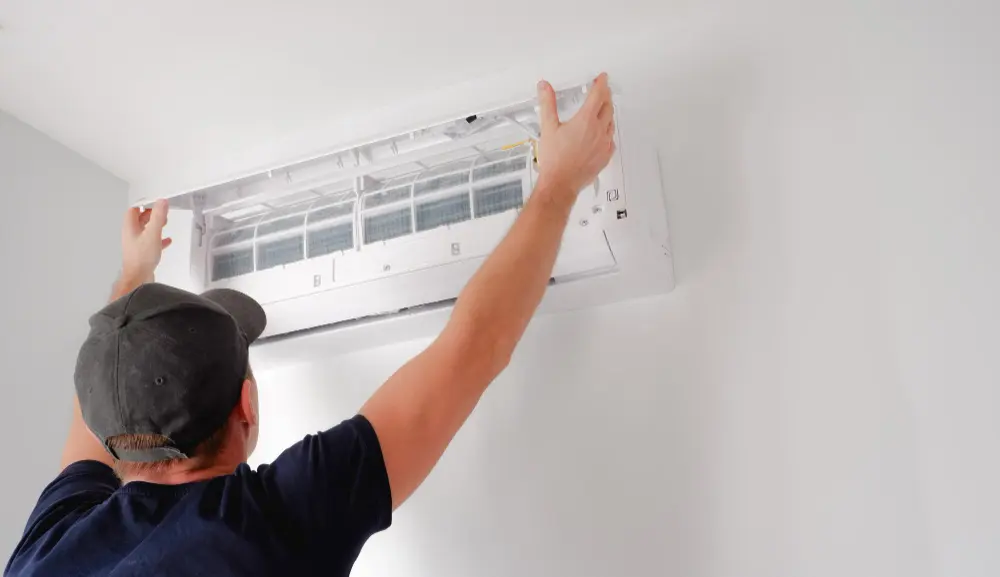
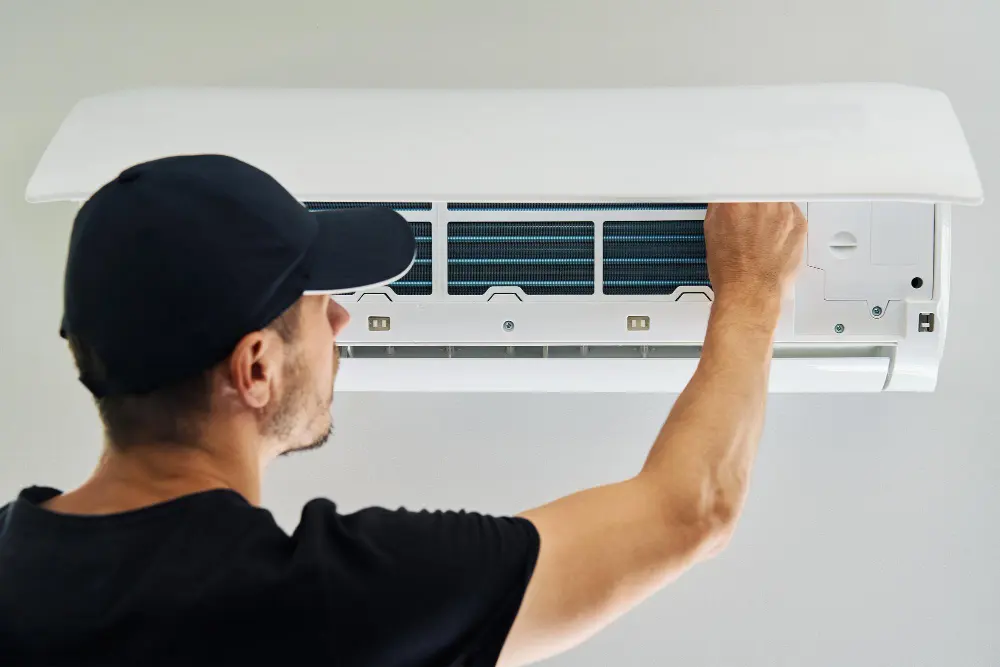
During servicing, an installer or qualified technician can inspect relevant components, check system operation and identify issues requiring attention.
Maintenance may include checks of:
The precise maintenance requirements depend on the equipment and how it is used.
Businesses should follow the manufacturer’s recommendations and ask their installer what servicing schedule is appropriate for their system.
Does the way a business uses its system matter?
Yes. Operating habits can affect both performance and system workload.
For example, setting an extremely low cooling temperature during hot weather may place unnecessary demand on the equipment without making the room comfortable any faster.
Similarly, constantly changing temperature settings or running equipment in unoccupied areas may not be helpful.
Businesses can encourage sensible operation by:
- Using reasonable temperature settings
- Keeping doors and windows closed while conditioning
- Using zoning where available
- Avoiding unnecessary operation
- Reporting unusual behaviour promptly
- Keeping accessible areas around equipment clear
Small operational changes can support more consistent system performance.
What is an air conditioning system that heats and cools?
Many modern air conditioning systems can provide both heating and cooling.
For businesses, this can make the system useful throughout the year rather than only during summer.
An aircon which heat and cool Eltham businesses use may therefore be expected to operate across changing seasonal conditions.
Because the system may be used more frequently throughout the year, maintenance and sensible operation become even more important.
The precise heating performance depends on the equipment, building and operating conditions.
What causes emergency air conditioning failures?
There are many possible causes, and not every failure can be prevented.
Some issues may develop through normal wear and tear, while others can be related to blocked airflow, drainage problems, electrical faults or component failure.
Common examples include:
The cause should be properly diagnosed rather than assuming that replacing one visible component will solve the underlying issue.
How much can an emergency repair cost?
There is no standard emergency repair price.
The emergency air con cost can depend on the nature of the fault, the equipment, replacement parts, access requirements and whether the callout occurs outside normal working hours.
More complicated faults may require additional diagnostic time or specialist parts.
This is one reason preventive maintenance can be valuable. Although maintenance represents an ongoing cost, dealing with developing issues during planned servicing may be less disruptive than waiting until the system fails at an inconvenient time.
Businesses should also ask their installer about emergency support arrangements before a fault occurs.
What should staff do if the system starts behaving unusually?
Staff should know what signs to report.
A simple reporting process can help identify problems early.
For example, employees could be encouraged to report:
The business should avoid asking untrained staff to investigate technical faults themselves.
If there is a serious electrical concern, unusual smell or other safety issue, the equipment should be switched off where appropriate and professional assistance sought.
Why is outdoor unit maintenance important?
The outdoor unit plays a crucial role in the system.
Its surrounding area should remain sufficiently clear to allow appropriate airflow. Leaves, debris or other obstructions can interfere with operation.
Businesses should also make sure the outdoor equipment is not accidentally blocked by storage, deliveries or temporary structures.
A regular inspection can help identify obvious problems before they affect performance.
For commercial properties, outdoor units should also remain accessible for appropriate servicing.
What type of property do you have?


Semi-Detached

Detached

Terraced

Bungalow

Flat

Commercial or Small Office
It just takes 60 Seconds
And then you can book a free consultation
JK Cooling Solutions can help businesses review their existing air conditioning arrangements and identify sensible maintenance requirements. Speak to our team if your system is showing signs of reduced performance or reliability.
Can poor installation contribute to future problems?
Yes. Installation quality can affect how reliably a system operates.
Incorrect sizing, unsuitable equipment positioning, poorly planned drainage or inappropriate pipework can create problems during the system’s working life.
This is why choosing a competent installer is important from the beginning.
A properly designed installation should consider the building, system capacity, equipment locations, drainage, controls and expected usage.
How can businesses prepare for an emergency?
Even with good maintenance, unexpected faults can happen.
A simple contingency plan can reduce disruption.
Businesses should know:
It can also be useful to keep details of the model and installation information available for the service team.
Having this information ready can make fault diagnosis more straightforward.
Should businesses have a maintenance schedule?
For commercial systems, planned maintenance is worth considering, particularly where air conditioning is used frequently or is important to day-to-day operations.
The appropriate frequency depends on the equipment, usage and manufacturer’s recommendations.
A maintenance plan can provide an opportunity to:
The aim is not simply to service equipment because a calendar says it is due. Maintenance should reflect how the system is actually being used.
A typical Eltham business scenario
Imagine an Eltham office using a heat pump air conditioning system throughout the year. During summer, the system provides cooling to the main workspace. In winter, the same equipment helps heat the office.
Staff gradually notice that one room is taking longer to reach the desired temperature. The issue is initially treated as a minor inconvenience.
A professional inspection could identify the cause before the system stops working altogether. Depending on the diagnosis, the required action might be relatively straightforward compared with dealing with a complete failure during a busy period.
This illustrates why changes in performance should be treated as useful warning signs rather than simply accepted as normal.
What can businesses do between professional services?
Businesses can take simple steps without attempting technical repairs.
Where appropriate, staff can:
Technical work should be left to appropriately qualified professionals.
Is prevention always cheaper than an emergency repair?
Not necessarily in every individual case, but planned maintenance can help reduce the risk and disruption associated with unexpected failures.
The emergency air con cost may include not only the repair itself but also business disruption, staff inconvenience and potential loss of comfort for customers.
A planned service, by contrast, can be scheduled around business operations.
For businesses that rely heavily on heating and cooling, the value of preventing avoidable disruption can be particularly significant.
How should businesses choose a maintenance provider?
Look for a provider that understands the system and the commercial environment in which it operates.
Useful questions include:
A good maintenance relationship can make it easier to manage the system throughout its working life.
Related articles
What type of property do you have?
Semi-Detached
Detached
Terraced
Bungalow
Flat
Commercial or Small Office
At a glance
For a business, an air conditioning fault rarely happens at a convenient time. A system may stop cooling during a busy summer afternoon, fail to provide heating during a cold morning or develop a problem just when the premises is full of customers and staff.
Emergency repairs can be disruptive, particularly when the system is responsible for both heating and cooling. However, many avoidable problems can be reduced through sensible maintenance, correct operation and early attention to warning signs.
Understanding what causes commercial air conditioning problems can help business owners take action before a minor issue develops into a more disruptive failure.
Why do commercial air conditioning systems need regular attention?
Air conditioning systems contain mechanical, electrical and refrigeration components that work together to provide heating and cooling.
Commercial equipment may operate for long periods, particularly during hot or cold weather. Dust, restricted airflow, blocked drainage and general wear can gradually affect performance.
Regular attention can help identify problems such as:
A maintenance routine does not guarantee that a system will never fail, but it can reduce the likelihood of some preventable problems and provide an opportunity to identify developing faults.
If your commercial air conditioning is becoming unreliable, JK Cooling Solutions can assess the system and advise on appropriate maintenance or repairs. Contact our team before a minor issue becomes a major disruption.
What are the warning signs of an air conditioning problem?
A system does not always fail suddenly.
In many cases, there are warning signs that something is not working as it should.
Watch for:
- Cooling or heating that takes longer than usual
- Unusual smells
- Strange noises
- Water appearing around indoor units
- Weak airflow
- Frequent cycling on and off
- Temperature differences between rooms
- Unexpected increases in energy use
- Controls that do not respond properly
- Repeated fault messages
A change in performance does not necessarily mean a serious fault, but it should not simply be ignored.
Early investigation can sometimes prevent the system from deteriorating further.
Can maintenance reduce emergency callouts?
Regular professional maintenance can help identify potential problems before they become urgent.
During servicing, an installer or qualified technician can inspect relevant components, check system operation and identify issues requiring attention.
Maintenance may include checks of:
The precise maintenance requirements depend on the equipment and how it is used.
Businesses should follow the manufacturer’s recommendations and ask their installer what servicing schedule is appropriate for their system.
Does the way a business uses its system matter?
Yes. Operating habits can affect both performance and system workload.
For example, setting an extremely low cooling temperature during hot weather may place unnecessary demand on the equipment without making the room comfortable any faster.
Similarly, constantly changing temperature settings or running equipment in unoccupied areas may not be helpful.
Businesses can encourage sensible operation by:
- Using reasonable temperature settings
- Keeping doors and windows closed while conditioning
- Using zoning where available
- Avoiding unnecessary operation
- Reporting unusual behaviour promptly
- Keeping accessible areas around equipment clear
Small operational changes can support more consistent system performance.
What is an air conditioning system that heats and cools?
Many modern air conditioning systems can provide both heating and cooling.
For businesses, this can make the system useful throughout the year rather than only during summer.
An aircon which heat and cool Eltham businesses use may therefore be expected to operate across changing seasonal conditions.
Because the system may be used more frequently throughout the year, maintenance and sensible operation become even more important.
The precise heating performance depends on the equipment, building and operating conditions.
What causes emergency air conditioning failures?
There are many possible causes, and not every failure can be prevented.
Some issues may develop through normal wear and tear, while others can be related to blocked airflow, drainage problems, electrical faults or component failure.
Common examples include:
The cause should be properly diagnosed rather than assuming that replacing one visible component will solve the underlying issue.
How much can an emergency repair cost?
There is no standard emergency repair price.
The emergency air con cost can depend on the nature of the fault, the equipment, replacement parts, access requirements and whether the callout occurs outside normal working hours.
More complicated faults may require additional diagnostic time or specialist parts.
This is one reason preventive maintenance can be valuable. Although maintenance represents an ongoing cost, dealing with developing issues during planned servicing may be less disruptive than waiting until the system fails at an inconvenient time.
Businesses should also ask their installer about emergency support arrangements before a fault occurs.
What should staff do if the system starts behaving unusually?
Staff should know what signs to report.
A simple reporting process can help identify problems early.
For example, employees could be encouraged to report:
The business should avoid asking untrained staff to investigate technical faults themselves.
If there is a serious electrical concern, unusual smell or other safety issue, the equipment should be switched off where appropriate and professional assistance sought.
Why is outdoor unit maintenance important?
The outdoor unit plays a crucial role in the system.
Its surrounding area should remain sufficiently clear to allow appropriate airflow. Leaves, debris or other obstructions can interfere with operation.
Businesses should also make sure the outdoor equipment is not accidentally blocked by storage, deliveries or temporary structures.
A regular inspection can help identify obvious problems before they affect performance.
For commercial properties, outdoor units should also remain accessible for appropriate servicing.
What type of property do you have?
Semi-Detached
Detached
Terraced
Bungalow
Flat
Commercial or Small Office
It just takes 60 Seconds
And then you can book a free consultation
JK Cooling Solutions can help businesses review their existing air conditioning arrangements and identify sensible maintenance requirements. Speak to our team if your system is showing signs of reduced performance or reliability.
Can poor installation contribute to future problems?
Yes. Installation quality can affect how reliably a system operates.
Incorrect sizing, unsuitable equipment positioning, poorly planned drainage or inappropriate pipework can create problems during the system’s working life.
This is why choosing a competent installer is important from the beginning.
A properly designed installation should consider the building, system capacity, equipment locations, drainage, controls and expected usage.
How can businesses prepare for an emergency?
Even with good maintenance, unexpected faults can happen.
A simple contingency plan can reduce disruption.
Businesses should know:
It can also be useful to keep details of the model and installation information available for the service team.
Having this information ready can make fault diagnosis more straightforward.
Should businesses have a maintenance schedule?
For commercial systems, planned maintenance is worth considering, particularly where air conditioning is used frequently or is important to day-to-day operations.
The appropriate frequency depends on the equipment, usage and manufacturer’s recommendations.
A maintenance plan can provide an opportunity to:
The aim is not simply to service equipment because a calendar says it is due. Maintenance should reflect how the system is actually being used.
A typical Eltham business scenario
Imagine an Eltham office using a heat pump air conditioning system throughout the year. During summer, the system provides cooling to the main workspace. In winter, the same equipment helps heat the office.
Staff gradually notice that one room is taking longer to reach the desired temperature. The issue is initially treated as a minor inconvenience.
A professional inspection could identify the cause before the system stops working altogether. Depending on the diagnosis, the required action might be relatively straightforward compared with dealing with a complete failure during a busy period.
This illustrates why changes in performance should be treated as useful warning signs rather than simply accepted as normal.
What can businesses do between professional services?
Businesses can take simple steps without attempting technical repairs.
Where appropriate, staff can:
Technical work should be left to appropriately qualified professionals.
Is prevention always cheaper than an emergency repair?
Not necessarily in every individual case, but planned maintenance can help reduce the risk and disruption associated with unexpected failures.
The emergency air con cost may include not only the repair itself but also business disruption, staff inconvenience and potential loss of comfort for customers.
A planned service, by contrast, can be scheduled around business operations.
For businesses that rely heavily on heating and cooling, the value of preventing avoidable disruption can be particularly significant.
How should businesses choose a maintenance provider?
Look for a provider that understands the system and the commercial environment in which it operates.
Useful questions include:
A good maintenance relationship can make it easier to manage the system throughout its working life.
Related articles
What type of property do you have?
Semi-Detached
Detached
Terraced
Bungalow
Flat
Commercial or Small Office