AC Installation Cost Checks Before Peak-Season Bookings
Compare AC installation costs in Eltham with confidence. Learn what affects wall mounted aircon prices, what quotes should include and how to prepare.

Why you can trust our content
Our team is fully trained, qualified and highly experienced in the air conditioning industry.

Frequently Asked Questions
AC Installation Cost Checks Before Peak-Season Bookings
Arranging air conditioning before the summer rush can make it easier to plan a comfortable home without feeling pressured to make a quick decision. However, before booking an installer, it is worth understanding what your quotation covers and how the total AC installation cost in Eltham is calculated.
The price of a wall mounted air conditioning unit is only one part of the overall cost. The size of the room, the equipment selected, the route for pipework, the position of the outdoor unit and any additional electrical work can all affect the final amount. Two quotes for what appears to be the same installation may therefore cover different work.
Taking time to check these details before peak-season bookings helps you compare options fairly, plan your budget and avoid unexpected costs. Whether you are cooling a bedroom, a home office or a larger living area, a clear quotation is a useful starting point.
What Makes Up the Total AC Installation Cost in Eltham?
The total cost generally includes the air conditioning equipment and the labour and materials needed to install it. The exact breakdown depends on the property and the system being fitted.
For a typical wall mounted split system, an installer will need to assess the indoor unit position, outdoor unit location, pipework route, drainage requirements and electrical arrangements. If the installation is straightforward, the work may be less involved than a project requiring longer pipe runs, restricted access or changes to existing services.
Before accepting a quotation, check the following:
- Equipment: Confirm the make, model and cooling capacity of the proposed unit.
- Installation labour: Establish which fitting and commissioning tasks are included.
- Pipework and drainage: Ask whether the required materials and installation are covered.
- Electrical work: Confirm whether any necessary electrical alterations are included.
- Mounting and access: Check whether brackets, access equipment or other materials are included.
- Commissioning: Make sure the system will be tested and checked after installation.
- Additional charges: Ask what circumstances could lead to extra costs.
A detailed quote should explain the work being proposed rather than relying on a single headline figure.
How Does Wall Mounted Aircon Price Vary Between Homes?
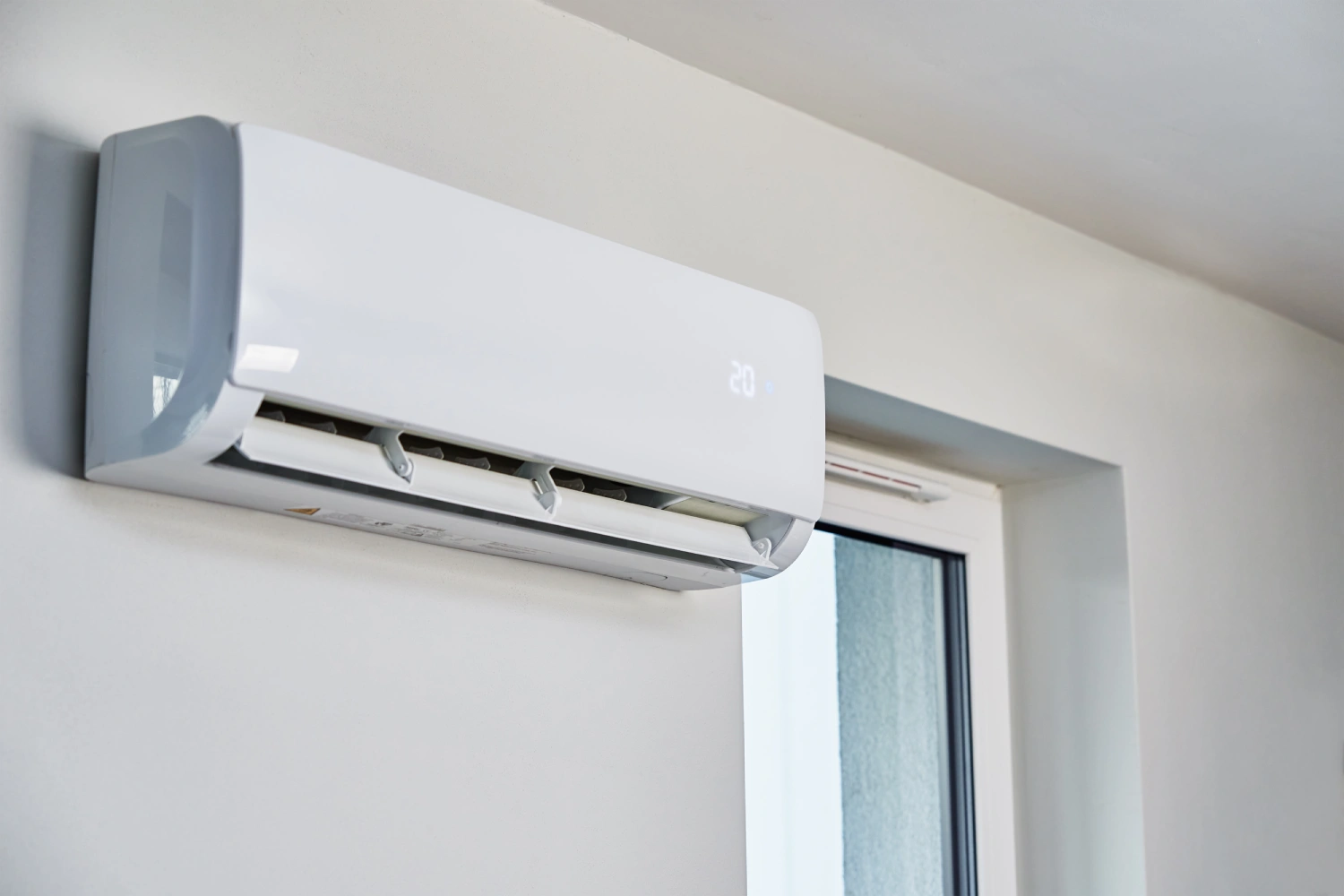
A wall mounted air conditioning system is often considered for individual rooms because it can provide targeted cooling without requiring a full network of ducts. However, the price can vary considerably depending on the installation.
Room size and heat gain
The unit needs to be suitable for the room it will serve. A compact bedroom with limited direct sunlight may have different requirements from a large room with tall ceilings and wide, south-facing windows.
An installer may consider:
- Room length, width and ceiling height.
- The amount of sunlight entering through windows.
- Insulation and the property’s general heat gain.
- How many people regularly use the room.
- Heat from computers, televisions and other equipment.
- Whether the space connects to other rooms through open doorways.
Choosing a unit based on room size alone can be misleading. A proper assessment helps establish an appropriate capacity rather than simply selecting the cheapest model.
Indoor and outdoor unit positions
The position of the indoor unit affects how effectively cooled air can circulate. The outdoor unit also needs suitable airflow and a location that allows safe installation and future maintenance.
Installation costs may be affected by the distance between the units, the route through walls, drainage arrangements and access to the chosen locations. A survey can help identify these requirements before the work is booked.
Equipment specification
Wall mounted units are available with different capacities, controls, noise characteristics and energy-efficiency ratings. Features and specifications vary between models, so it is important to compare the actual equipment rather than the general description of a system.
Ask the installer to explain why a particular model is recommended for your room. A more expensive unit is not automatically the best choice, just as the lowest-priced model may not be the most suitable.
What Should You Check Before Accepting an Installation Quote?
A quotation is most useful when it clearly describes the complete installation. If key details are missing, ask for clarification before confirming the booking.
| Quote detail | What to check | Why it matters |
|---|---|---|
| Unit specification | Make, model and capacity | Confirms which equipment you are paying for |
| Number of units | Indoor and outdoor unit quantities | Prevents misunderstandings about the system supplied |
| Installation labour | Tasks covered by the quoted price | Helps compare different installers fairly |
| Pipework and drainage | Materials, route and installation | These requirements can vary between properties |
| Electrical work | Included work and exclusions | Helps identify possible additional costs |
| Unit mounting | Brackets and other necessary materials | Confirms how the equipment will be secured |
| Commissioning | Testing and operational checks | Helps ensure the installed system is checked before handover |
| Warranty | Manufacturer and workmanship cover | Clarifies the protection available |
| Disposal | Removal of old equipment, if needed | Establishes whether disposal is included |
| Installation date | Proposed timing and any conditions | Helps you plan around the work |
Do not assume that an advertised installation price covers every possible requirement. It may be based on a standard installation, with additional work priced separately.
If you are comparing quotes for air conditioning in Eltham, ask each installer to price the same rooms and explain any differences in equipment or installation scope.
Could Additional Work Increase the Installation Cost?
Yes. Some properties require work beyond fitting the indoor and outdoor units. These requirements are not necessarily problems, but they should be identified and explained wherever possible before installation begins.
Potential examples include:
- Longer or more complicated pipework routes.
- Difficult access to the proposed outdoor unit location.
- Additional electrical work.
- Changes to drainage arrangements.
- Extra mounting materials or access equipment.
- Removal of an existing system.
- Restrictions on where equipment can be positioned.
The precise requirements depend on the property. An installer may not be able to confirm every detail from a brief telephone conversation, which is why a site assessment can be valuable.
Ask whether the quotation is fixed for the stated scope of work and how additional requirements will be handled. If further work becomes necessary, you should understand what it involves and what it will cost before authorising it.
For advice about your home, you can contact JK Cooling Solutions to discuss your requirements and arrange a quotation.
Is a Wall Mounted System the Most Cost-Effective Option?
For a single room, a wall mounted split system may be a practical option because it can cool a specific area without the ductwork associated with a ducted system. However, the best solution depends on how many rooms need cooling and how you use your home.
| Your cooling requirement | Option worth discussing | Important consideration |
|---|---|---|
| One bedroom | Single-room wall mounted split system | Correct sizing and quiet operation |
| Home office | Single-room wall mounted split system | Heat from computers and regular occupancy |
| Two or more separate rooms | Multi-split system or separate split systems | Equipment layout and independent control |
| Several rooms throughout the property | Ducted air conditioning or a multi-split design | Installation space, zoning and overall cost |
| Cooling and heating | A suitable reverse-cycle system | Confirm heating capability and property requirements |
This table is a starting point, not a substitute for a property assessment. A multi-split system may reduce the number of outdoor units needed, for example, but its suitability and overall cost depend on the design and equipment selected.
If you only need to cool one room, ask whether a single split system would meet your needs. If several rooms regularly overheat, compare the costs and practical implications of different whole-home approaches before deciding.
How Can You Compare Wall Mounted Aircon Prices Fairly?
Comparing prices becomes easier when each quotation covers a similar specification and scope of work. A low headline figure may exclude items that another quote includes, so the total price alone does not tell the whole story.
Use these checks when reviewing your options:
- Compare like-for-like equipment. Check the model, capacity and main specifications.
- Review the installation scope. Confirm which materials and tasks are included.
- Check additional charges. Ask about electrical work, access requirements and longer pipework routes.
- Understand the warranty. Check the conditions and whether manufacturer and workmanship cover are separate.
- Consider operating costs. Compare the energy-efficiency information for suitable models.
- Confirm the installation date. Make sure the proposed timing works for your household.
- Ask about aftercare. Understand the maintenance guidance and support available after installation.
A good comparison considers both the initial price and the suitability of the proposed system. Choosing the lowest quote without understanding its exclusions could make budgeting more difficult later.
Why Should You Arrange an Installation Survey Before Summer?
As warmer weather approaches, more households may start looking for cooling solutions. Installer schedules can become busy, and preferred appointment dates may be harder to secure.
Booking a survey early can give you time to assess your options before you need the system urgently. It also allows the installer to identify practical issues, such as the best location for the outdoor unit or the route for pipework.
An early survey may help you:
- Establish which type of system is appropriate.
- Confirm the likely installation requirements.
- Understand the quotation and any exclusions.
- Compare equipment specifications.
- Discuss suitable installation dates.
- Plan around other property work.
Early booking does not guarantee a lower price or immediate equipment availability. Its main benefit is giving you more time to make an informed decision.
If you are considering a wall mounted system, visit the JK Cooling Solutions website to discuss your requirements and request information about installation options in Eltham.
What Can You Do to Keep Your Air Conditioning Budget Under Control?
Managing your budget starts with being clear about the rooms you want to cool and the comfort you expect from the system.
Rather than choosing equipment based on an advertised price, explain your requirements to the installer and ask for a recommendation based on the property. This helps avoid paying for a system that is unsuitable or unnecessarily complicated for your needs.
A few practical steps can help:
- Prioritise the rooms that need cooling most. This can help establish whether a single-room or multi-room system is appropriate.
- Set a realistic budget. Include installation and any additional work identified during the survey.
- Discuss unit placement early. A practical layout may help avoid unnecessary installation complications.
- Compare running-cost information. The purchase price is only one part of the cost of owning a system.
- Read the quotation carefully. Check the equipment, installation scope, exclusions and warranty terms.
- Avoid rushed decisions. Allow time to ask questions and compare suitable alternatives.
It is also worth considering whether your needs may change. If you expect to convert a loft or extend your home, mention those plans during the survey. The installer can then explain whether they affect the current design or future options.
Related articles



What type of property do you have?

Semi-Detached

Detached

Terraced

Bungalow

Flat

Commercial or Small Office
Frequently Asked Questions
AC Installation Cost Checks Before Peak-Season Bookings
Arranging air conditioning before the summer rush can make it easier to plan a comfortable home without feeling pressured to make a quick decision. However, before booking an installer, it is worth understanding what your quotation covers and how the total AC installation cost in Eltham is calculated.
The price of a wall mounted air conditioning unit is only one part of the overall cost. The size of the room, the equipment selected, the route for pipework, the position of the outdoor unit and any additional electrical work can all affect the final amount. Two quotes for what appears to be the same installation may therefore cover different work.
Taking time to check these details before peak-season bookings helps you compare options fairly, plan your budget and avoid unexpected costs. Whether you are cooling a bedroom, a home office or a larger living area, a clear quotation is a useful starting point.
What Makes Up the Total AC Installation Cost in Eltham?
The total cost generally includes the air conditioning equipment and the labour and materials needed to install it. The exact breakdown depends on the property and the system being fitted.
For a typical wall mounted split system, an installer will need to assess the indoor unit position, outdoor unit location, pipework route, drainage requirements and electrical arrangements. If the installation is straightforward, the work may be less involved than a project requiring longer pipe runs, restricted access or changes to existing services.
Before accepting a quotation, check the following:
- Equipment: Confirm the make, model and cooling capacity of the proposed unit.
- Installation labour: Establish which fitting and commissioning tasks are included.
- Pipework and drainage: Ask whether the required materials and installation are covered.
- Electrical work: Confirm whether any necessary electrical alterations are included.
- Mounting and access: Check whether brackets, access equipment or other materials are included.
- Commissioning: Make sure the system will be tested and checked after installation.
- Additional charges: Ask what circumstances could lead to extra costs.
A detailed quote should explain the work being proposed rather than relying on a single headline figure.
How Does Wall Mounted Aircon Price Vary Between Homes?
A wall mounted air conditioning system is often considered for individual rooms because it can provide targeted cooling without requiring a full network of ducts. However, the price can vary considerably depending on the installation.
Room size and heat gain
The unit needs to be suitable for the room it will serve. A compact bedroom with limited direct sunlight may have different requirements from a large room with tall ceilings and wide, south-facing windows.
An installer may consider:
- Room length, width and ceiling height.
- The amount of sunlight entering through windows.
- Insulation and the property’s general heat gain.
- How many people regularly use the room.
- Heat from computers, televisions and other equipment.
- Whether the space connects to other rooms through open doorways.
Choosing a unit based on room size alone can be misleading. A proper assessment helps establish an appropriate capacity rather than simply selecting the cheapest model.
Indoor and outdoor unit positions
The position of the indoor unit affects how effectively cooled air can circulate. The outdoor unit also needs suitable airflow and a location that allows safe installation and future maintenance.
Installation costs may be affected by the distance between the units, the route through walls, drainage arrangements and access to the chosen locations. A survey can help identify these requirements before the work is booked.
Equipment specification
Wall mounted units are available with different capacities, controls, noise characteristics and energy-efficiency ratings. Features and specifications vary between models, so it is important to compare the actual equipment rather than the general description of a system.
Ask the installer to explain why a particular model is recommended for your room. A more expensive unit is not automatically the best choice, just as the lowest-priced model may not be the most suitable.
What Should You Check Before Accepting an Installation Quote?
A quotation is most useful when it clearly describes the complete installation. If key details are missing, ask for clarification before confirming the booking.
| Quote detail | What to check | Why it matters |
|---|---|---|
| Unit specification | Make, model and capacity | Confirms which equipment you are paying for |
| Number of units | Indoor and outdoor unit quantities | Prevents misunderstandings about the system supplied |
| Installation labour | Tasks covered by the quoted price | Helps compare different installers fairly |
| Pipework and drainage | Materials, route and installation | These requirements can vary between properties |
| Electrical work | Included work and exclusions | Helps identify possible additional costs |
| Unit mounting | Brackets and other necessary materials | Confirms how the equipment will be secured |
| Commissioning | Testing and operational checks | Helps ensure the installed system is checked before handover |
| Warranty | Manufacturer and workmanship cover | Clarifies the protection available |
| Disposal | Removal of old equipment, if needed | Establishes whether disposal is included |
| Installation date | Proposed timing and any conditions | Helps you plan around the work |
Do not assume that an advertised installation price covers every possible requirement. It may be based on a standard installation, with additional work priced separately.
If you are comparing quotes for air conditioning in Eltham, ask each installer to price the same rooms and explain any differences in equipment or installation scope.
Could Additional Work Increase the Installation Cost?
Yes. Some properties require work beyond fitting the indoor and outdoor units. These requirements are not necessarily problems, but they should be identified and explained wherever possible before installation begins.
Potential examples include:
- Longer or more complicated pipework routes.
- Difficult access to the proposed outdoor unit location.
- Additional electrical work.
- Changes to drainage arrangements.
- Extra mounting materials or access equipment.
- Removal of an existing system.
- Restrictions on where equipment can be positioned.
The precise requirements depend on the property. An installer may not be able to confirm every detail from a brief telephone conversation, which is why a site assessment can be valuable.
Ask whether the quotation is fixed for the stated scope of work and how additional requirements will be handled. If further work becomes necessary, you should understand what it involves and what it will cost before authorising it.
For advice about your home, you can contact JK Cooling Solutions to discuss your requirements and arrange a quotation.
Is a Wall Mounted System the Most Cost-Effective Option?
For a single room, a wall mounted split system may be a practical option because it can cool a specific area without the ductwork associated with a ducted system. However, the best solution depends on how many rooms need cooling and how you use your home.
| Your cooling requirement | Option worth discussing | Important consideration |
|---|---|---|
| One bedroom | Single-room wall mounted split system | Correct sizing and quiet operation |
| Home office | Single-room wall mounted split system | Heat from computers and regular occupancy |
| Two or more separate rooms | Multi-split system or separate split systems | Equipment layout and independent control |
| Several rooms throughout the property | Ducted air conditioning or a multi-split design | Installation space, zoning and overall cost |
| Cooling and heating | A suitable reverse-cycle system | Confirm heating capability and property requirements |
This table is a starting point, not a substitute for a property assessment. A multi-split system may reduce the number of outdoor units needed, for example, but its suitability and overall cost depend on the design and equipment selected.
If you only need to cool one room, ask whether a single split system would meet your needs. If several rooms regularly overheat, compare the costs and practical implications of different whole-home approaches before deciding.
How Can You Compare Wall Mounted Aircon Prices Fairly?
Comparing prices becomes easier when each quotation covers a similar specification and scope of work. A low headline figure may exclude items that another quote includes, so the total price alone does not tell the whole story.
Use these checks when reviewing your options:
- Compare like-for-like equipment. Check the model, capacity and main specifications.
- Review the installation scope. Confirm which materials and tasks are included.
- Check additional charges. Ask about electrical work, access requirements and longer pipework routes.
- Understand the warranty. Check the conditions and whether manufacturer and workmanship cover are separate.
- Consider operating costs. Compare the energy-efficiency information for suitable models.
- Confirm the installation date. Make sure the proposed timing works for your household.
- Ask about aftercare. Understand the maintenance guidance and support available after installation.
A good comparison considers both the initial price and the suitability of the proposed system. Choosing the lowest quote without understanding its exclusions could make budgeting more difficult later.
Why Should You Arrange an Installation Survey Before Summer?
As warmer weather approaches, more households may start looking for cooling solutions. Installer schedules can become busy, and preferred appointment dates may be harder to secure.
Booking a survey early can give you time to assess your options before you need the system urgently. It also allows the installer to identify practical issues, such as the best location for the outdoor unit or the route for pipework.
An early survey may help you:
- Establish which type of system is appropriate.
- Confirm the likely installation requirements.
- Understand the quotation and any exclusions.
- Compare equipment specifications.
- Discuss suitable installation dates.
- Plan around other property work.
Early booking does not guarantee a lower price or immediate equipment availability. Its main benefit is giving you more time to make an informed decision.
If you are considering a wall mounted system, visit the JK Cooling Solutions website to discuss your requirements and request information about installation options in Eltham.
What Can You Do to Keep Your Air Conditioning Budget Under Control?
Managing your budget starts with being clear about the rooms you want to cool and the comfort you expect from the system.
Rather than choosing equipment based on an advertised price, explain your requirements to the installer and ask for a recommendation based on the property. This helps avoid paying for a system that is unsuitable or unnecessarily complicated for your needs.
A few practical steps can help:
- Prioritise the rooms that need cooling most. This can help establish whether a single-room or multi-room system is appropriate.
- Set a realistic budget. Include installation and any additional work identified during the survey.
- Discuss unit placement early. A practical layout may help avoid unnecessary installation complications.
- Compare running-cost information. The purchase price is only one part of the cost of owning a system.
- Read the quotation carefully. Check the equipment, installation scope, exclusions and warranty terms.
- Avoid rushed decisions. Allow time to ask questions and compare suitable alternatives.
It is also worth considering whether your needs may change. If you expect to convert a loft or extend your home, mention those plans during the survey. The installer can then explain whether they affect the current design or future options.
Related articles
What type of property do you have?
Semi-Detached
Detached
Terraced
Bungalow
Flat