Ducted Air Con for Offices and Larger Premises: Is It Worth the Install?
Considering ducted air conditioning for your Eltham business? Learn how ducted systems work, what affects installation costs and whether zoning and centralised temperature control could suit your commercial premises.

Why you can trust our content
Our team is fully trained, qualified and highly experienced in the air conditioning industry.

At a glance
Larger offices and commercial premises often need a different approach to temperature control from a single-room workspace. When several rooms or a substantial open-plan area need heating and cooling, relying on multiple wall-mounted units may not always provide the most practical solution.
Ducted air conditioning is one option worth considering. It distributes conditioned air through a network of concealed or discreetly positioned ducts, allowing several areas of a building to be served from a central system.
However, ducted installation is a larger project than fitting a straightforward split system. Businesses therefore need to consider the property, ceiling structure, usage patterns, installation access and long-term value before deciding whether it is the right investment.
What is ducted air conditioning?
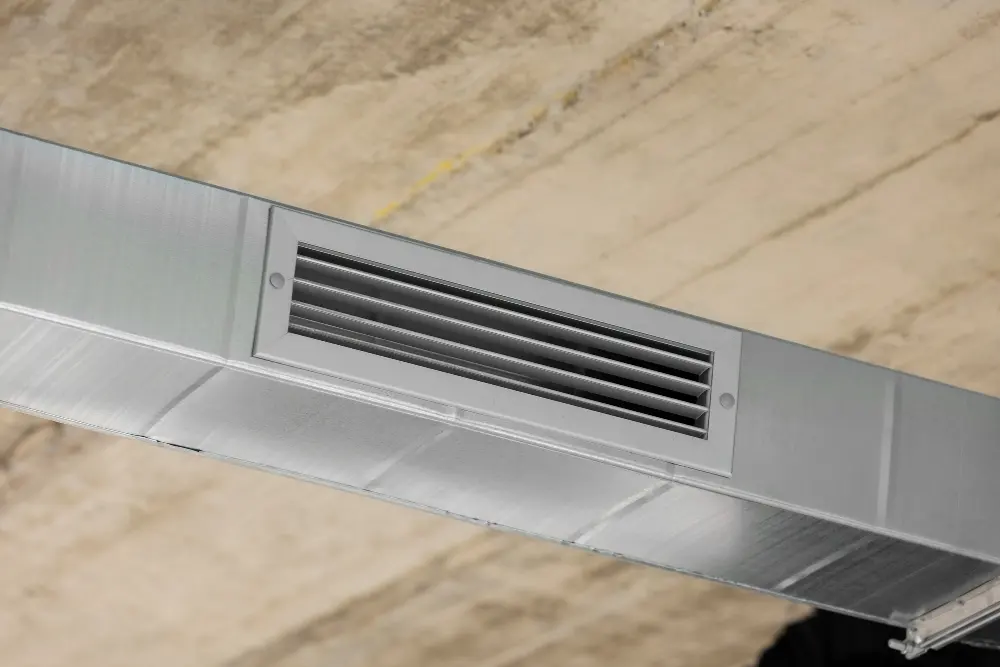
A ducted system uses a central indoor unit to distribute heated or cooled air through ductwork. Air is delivered into rooms through grilles or diffusers, while the main equipment can often be positioned out of sight.
This arrangement can be useful where a business wants a consistent appearance without several prominent indoor wall units.
Potential advantages include:
- Heating and cooling from one integrated system
- A discreet appearance
- Coverage across several rooms
- The possibility of zoning different areas
- Centralised controls
- Even air distribution when correctly designed
- Less visible equipment within occupied spaces
The suitability of ducted air conditioning depends heavily on the building. A property with suitable ceiling voids and straightforward access may be much easier to adapt than an older premises with limited space above the ceilings.
If you are considering ducted air conditioning for a commercial property, JK Cooling Solutions can assess the building and discuss whether a ducted arrangement is practical. Contact our team for tailored advice before committing to a major installation.
When is ducted air conditioning worth considering?
Ducted systems can make sense where several areas require temperature control and the business wants one coordinated system.
They may be considered for:
- Larger offices
- Open-plan commercial spaces
- Professional premises
- Retail environments
- Clinics with multiple rooms
- Studios
- Mixed-use commercial buildings
The strongest case usually exists when the property is large enough for multiple individual systems to become inconvenient or visually intrusive.
For a small office with one main room, a wall-mounted split system may be simpler and more economical. For a larger premises with several occupied areas, the benefits of centralised distribution may become more relevant.
The question is not simply whether ducted air conditioning is technically possible. It is whether the installation offers enough practical benefit to justify the additional complexity.
How does ducted air conditioning work across different rooms?
Ductwork distributes conditioned air from the central system to individual areas. Depending on the design, the system can be divided into zones so that different parts of the premises can be controlled according to their usage.
For example, an office may have separate requirements for:
| Area | Typical requirement |
| Reception | Comfortable temperature during opening hours |
| Open-plan office | Consistent conditions for staff |
| Meeting room | Flexible control around occupancy |
| Staff room | Lower usage than main workspace |
| Consultation room | Quiet and stable temperature |
| Storage area | May require little or no conditioning |
Zoning can be particularly useful where parts of a building are occupied at different times. It can help avoid conditioning areas unnecessarily when they are empty.
However, the precise configuration depends on the equipment, ductwork design and controls selected.
What type of property do you have?


Semi-Detached

Detached

Terraced

Bungalow

Flat

Commercial or Small Office
It just takes 60 Seconds
And then you can book a free consultation
What does installation involve?
Ducted installation can involve more planning than a standard split system.
The installer needs to determine where the main equipment can be positioned and how ductwork can be routed throughout the property.
The project may involve:
- Assessing available ceiling or service voids
- Planning duct routes
- Selecting suitable supply and return air positions
- Positioning the indoor and outdoor equipment
- Installing ductwork
- Installing grilles or diffusers
- Providing drainage
- Completing required electrical connections
- Installing controls
- Testing and commissioning the system
Existing ceilings, structural features, lighting and other building services can affect the available routes.
This is why choosing an experienced ducted air con installer Eltham businesses can work with is important. The installation needs to be planned around the actual building rather than based on a generic layout.
What affects ducted air conditioning installation cost?
There is no standard price because every ducted installation is different.
The total ducted air conditioning installation cost can be affected by the size and configuration of the property, the number of zones, the amount of ductwork required and how accessible the installation areas are.
Other factors can include:
A larger building does not necessarily mean a proportionally simple increase in cost. A compact property with difficult access can sometimes require more labour than a larger premises with a straightforward ceiling layout.
For this reason, businesses should request a detailed site assessment and quotation rather than relying on a broad online estimate.
Is ducted air conditioning more expensive than a split system?
The initial installation can be more expensive because a ducted system involves central equipment, ductwork, multiple outlets and additional installation planning.
A split system may be more appropriate where only one or two rooms need conditioning.
However, initial price should not be the only consideration. A business should also look at how many individual systems would otherwise be required, how much wall space they would occupy and how the building needs to be controlled.
For a larger premises, centralised distribution and zoning may offer practical benefits that justify the additional installation investment.
JK Cooling Solutions can help you compare the practical differences between split and ducted systems for your premises. Speak to our team if you want to understand the likely installation requirements before making a decision.
Does ducted air conditioning provide heating as well as cooling?
Many ducted systems are capable of providing both heating and cooling.
This can make them useful for businesses that want one system to manage indoor temperatures throughout the year. The exact heating performance depends on the equipment selected and the characteristics of the building.
A business should also consider how the system will interact with existing heating arrangements. In some premises, ducted air conditioning may become a major part of the heating strategy, while in others it may provide additional temperature control.
A proper assessment should establish what the system is expected to achieve during both summer and winter.
How important is zoning?
Zoning can be one of the main advantages of a ducted system for larger premises.
Not every part of a commercial building is necessarily occupied at the same time. A meeting room may only be used for a few hours each day, while the main office remains occupied throughout working hours.
With suitable controls, different areas can potentially be managed according to their usage.
This can improve flexibility and may help avoid conditioning spaces unnecessarily. However, zoning needs to be planned properly. Adding controls after installation may not provide the same result as designing the system around the property’s actual usage from the outset.
What about energy efficiency?
Efficiency depends on the equipment, building characteristics, system design and how the system is operated.
A ducted system can be effective when it is correctly sized and designed for the premises. Poorly designed ductwork, unsuitable controls or excessive conditioning of unused areas can reduce the benefits.
Businesses can support efficient operation by:
The building itself also matters. Heat entering through windows, poor insulation and high internal heat loads can all increase cooling demand.
Could installation disrupt an existing office?
Potentially, yes. Ducted systems generally require more installation work than a simple wall-mounted unit.
Depending on the building, installers may need access above ceilings, around service areas and to external equipment locations.
Businesses should discuss the installation schedule before work begins. It may be possible to complete some stages outside normal working hours or in phases, depending on the project.
Good preparation can reduce disruption. Staff can be informed about access requirements, furniture can be moved where necessary and rooms can be scheduled around the installation work.
What should businesses ask a ducted air conditioning installer?
Before agreeing to a project, ask the installer to explain the proposed design.
Useful questions include:
- How has the required system capacity been calculated?
- How many zones will the system have?
- Where will the main equipment be located?
- Where will the ductwork run?
- How will access above ceilings be handled?
- Where will the supply and return grilles be positioned?
- How will condensate drainage be managed?
- What controls will be provided?
- What maintenance will be required?
- What is included in the quotation?
A detailed proposal should give the business a reasonable understanding of the equipment, installation work and expected costs.
When comparing a ducted air con installer Eltham businesses are considering, the quality of the proposed design is just as important as the headline price.
A typical commercial example
Imagine a larger Eltham office with an open-plan workspace, several meeting rooms and a reception area. The main office is occupied throughout the day, but the meeting rooms are used intermittently.
Several individual wall-mounted systems could provide cooling, but this might create a cluttered appearance and require staff to manage multiple controls.
A ducted system with suitable zoning could potentially provide a more integrated approach. The main workspace could be conditioned during normal operating hours, while meeting rooms could be managed according to their use.
The exact solution would depend on the building structure and available installation space, but the example shows why system selection should reflect the way a property operates.
When might ducted air conditioning not be suitable?
Ducted air conditioning is not automatically the best option for every larger property.
A different system may make more sense where:
A professional survey should identify these limitations before a business commits to the project.
Related articles



What type of property do you have?
Semi-Detached
Detached
Terraced
Bungalow
Flat
Commercial or Small Office
At a glance
Larger offices and commercial premises often need a different approach to temperature control from a single-room workspace. When several rooms or a substantial open-plan area need heating and cooling, relying on multiple wall-mounted units may not always provide the most practical solution.
Ducted air conditioning is one option worth considering. It distributes conditioned air through a network of concealed or discreetly positioned ducts, allowing several areas of a building to be served from a central system.
However, ducted installation is a larger project than fitting a straightforward split system. Businesses therefore need to consider the property, ceiling structure, usage patterns, installation access and long-term value before deciding whether it is the right investment.
What is ducted air conditioning?
A ducted system uses a central indoor unit to distribute heated or cooled air through ductwork. Air is delivered into rooms through grilles or diffusers, while the main equipment can often be positioned out of sight.
This arrangement can be useful where a business wants a consistent appearance without several prominent indoor wall units.
Potential advantages include:
- Heating and cooling from one integrated system
- A discreet appearance
- Coverage across several rooms
- The possibility of zoning different areas
- Centralised controls
- Even air distribution when correctly designed
- Less visible equipment within occupied spaces
The suitability of ducted air conditioning depends heavily on the building. A property with suitable ceiling voids and straightforward access may be much easier to adapt than an older premises with limited space above the ceilings.
If you are considering ducted air conditioning for a commercial property, JK Cooling Solutions can assess the building and discuss whether a ducted arrangement is practical. Contact our team for tailored advice before committing to a major installation.
When is ducted air conditioning worth considering?
Ducted systems can make sense where several areas require temperature control and the business wants one coordinated system.
They may be considered for:
- Larger offices
- Open-plan commercial spaces
- Professional premises
- Retail environments
- Clinics with multiple rooms
- Studios
- Mixed-use commercial buildings
The strongest case usually exists when the property is large enough for multiple individual systems to become inconvenient or visually intrusive.
For a small office with one main room, a wall-mounted split system may be simpler and more economical. For a larger premises with several occupied areas, the benefits of centralised distribution may become more relevant.
The question is not simply whether ducted air conditioning is technically possible. It is whether the installation offers enough practical benefit to justify the additional complexity.
How does ducted air conditioning work across different rooms?
Ductwork distributes conditioned air from the central system to individual areas. Depending on the design, the system can be divided into zones so that different parts of the premises can be controlled according to their usage.
For example, an office may have separate requirements for:
| Area | Typical requirement |
| Reception | Comfortable temperature during opening hours |
| Open-plan office | Consistent conditions for staff |
| Meeting room | Flexible control around occupancy |
| Staff room | Lower usage than main workspace |
| Consultation room | Quiet and stable temperature |
| Storage area | May require little or no conditioning |
Zoning can be particularly useful where parts of a building are occupied at different times. It can help avoid conditioning areas unnecessarily when they are empty.
However, the precise configuration depends on the equipment, ductwork design and controls selected.
What type of property do you have?
Semi-Detached
Detached
Terraced
Bungalow
Flat
Commercial or Small Office
It just takes 60 Seconds
And then you can book a free consultation
What does installation involve?
Ducted installation can involve more planning than a standard split system.
The installer needs to determine where the main equipment can be positioned and how ductwork can be routed throughout the property.
The project may involve:
- Assessing available ceiling or service voids
- Planning duct routes
- Selecting suitable supply and return air positions
- Positioning the indoor and outdoor equipment
- Installing ductwork
- Installing grilles or diffusers
- Providing drainage
- Completing required electrical connections
- Installing controls
- Testing and commissioning the system
Existing ceilings, structural features, lighting and other building services can affect the available routes.
This is why choosing an experienced ducted air con installer Eltham businesses can work with is important. The installation needs to be planned around the actual building rather than based on a generic layout.
What affects ducted air conditioning installation cost?
There is no standard price because every ducted installation is different.
The total ducted air conditioning installation cost can be affected by the size and configuration of the property, the number of zones, the amount of ductwork required and how accessible the installation areas are.
Other factors can include:
A larger building does not necessarily mean a proportionally simple increase in cost. A compact property with difficult access can sometimes require more labour than a larger premises with a straightforward ceiling layout.
For this reason, businesses should request a detailed site assessment and quotation rather than relying on a broad online estimate.
Is ducted air conditioning more expensive than a split system?
The initial installation can be more expensive because a ducted system involves central equipment, ductwork, multiple outlets and additional installation planning.
A split system may be more appropriate where only one or two rooms need conditioning.
However, initial price should not be the only consideration. A business should also look at how many individual systems would otherwise be required, how much wall space they would occupy and how the building needs to be controlled.
For a larger premises, centralised distribution and zoning may offer practical benefits that justify the additional installation investment.
JK Cooling Solutions can help you compare the practical differences between split and ducted systems for your premises. Speak to our team if you want to understand the likely installation requirements before making a decision.
Does ducted air conditioning provide heating as well as cooling?
Many ducted systems are capable of providing both heating and cooling.
This can make them useful for businesses that want one system to manage indoor temperatures throughout the year. The exact heating performance depends on the equipment selected and the characteristics of the building.
A business should also consider how the system will interact with existing heating arrangements. In some premises, ducted air conditioning may become a major part of the heating strategy, while in others it may provide additional temperature control.
A proper assessment should establish what the system is expected to achieve during both summer and winter.
How important is zoning?
Zoning can be one of the main advantages of a ducted system for larger premises.
Not every part of a commercial building is necessarily occupied at the same time. A meeting room may only be used for a few hours each day, while the main office remains occupied throughout working hours.
With suitable controls, different areas can potentially be managed according to their usage.
This can improve flexibility and may help avoid conditioning spaces unnecessarily. However, zoning needs to be planned properly. Adding controls after installation may not provide the same result as designing the system around the property’s actual usage from the outset.
What about energy efficiency?
Efficiency depends on the equipment, building characteristics, system design and how the system is operated.
A ducted system can be effective when it is correctly sized and designed for the premises. Poorly designed ductwork, unsuitable controls or excessive conditioning of unused areas can reduce the benefits.
Businesses can support efficient operation by:
The building itself also matters. Heat entering through windows, poor insulation and high internal heat loads can all increase cooling demand.
Could installation disrupt an existing office?
Potentially, yes. Ducted systems generally require more installation work than a simple wall-mounted unit.
Depending on the building, installers may need access above ceilings, around service areas and to external equipment locations.
Businesses should discuss the installation schedule before work begins. It may be possible to complete some stages outside normal working hours or in phases, depending on the project.
Good preparation can reduce disruption. Staff can be informed about access requirements, furniture can be moved where necessary and rooms can be scheduled around the installation work.
What should businesses ask a ducted air conditioning installer?
Before agreeing to a project, ask the installer to explain the proposed design.
Useful questions include:
- How has the required system capacity been calculated?
- How many zones will the system have?
- Where will the main equipment be located?
- Where will the ductwork run?
- How will access above ceilings be handled?
- Where will the supply and return grilles be positioned?
- How will condensate drainage be managed?
- What controls will be provided?
- What maintenance will be required?
- What is included in the quotation?
A detailed proposal should give the business a reasonable understanding of the equipment, installation work and expected costs.
When comparing a ducted air con installer Eltham businesses are considering, the quality of the proposed design is just as important as the headline price.
A typical commercial example
Imagine a larger Eltham office with an open-plan workspace, several meeting rooms and a reception area. The main office is occupied throughout the day, but the meeting rooms are used intermittently.
Several individual wall-mounted systems could provide cooling, but this might create a cluttered appearance and require staff to manage multiple controls.
A ducted system with suitable zoning could potentially provide a more integrated approach. The main workspace could be conditioned during normal operating hours, while meeting rooms could be managed according to their use.
The exact solution would depend on the building structure and available installation space, but the example shows why system selection should reflect the way a property operates.
When might ducted air conditioning not be suitable?
Ducted air conditioning is not automatically the best option for every larger property.
A different system may make more sense where:
A professional survey should identify these limitations before a business commits to the project.
Related articles
What type of property do you have?
Semi-Detached
Detached
Terraced
Bungalow
Flat
Commercial or Small Office