Split System AC for Eltham Workspaces: When Does It Make Commercial Sense?
Considering split system air conditioning for your Eltham business? Discover how split systems work, what affects installation costs and whether they are suitable for your workspace.

Why you can trust our content
Our team is fully trained, qualified and highly experienced in the air conditioning industry.

At a glance
For a small office, studio, shop or professional workspace, air conditioning does not necessarily need to involve a complicated building-wide system. A split system can provide targeted heating and cooling while allowing a business to control the temperature in the areas where it matters most.
However, choosing a split system should involve more than comparing equipment prices. The building layout, working hours, number of occupants, heat from equipment and available outdoor space can all influence whether the system is a sensible commercial investment.
Understanding how split systems work and what affects their installation can help Eltham business owners decide whether this approach fits their premises.
What is a split system air conditioner?
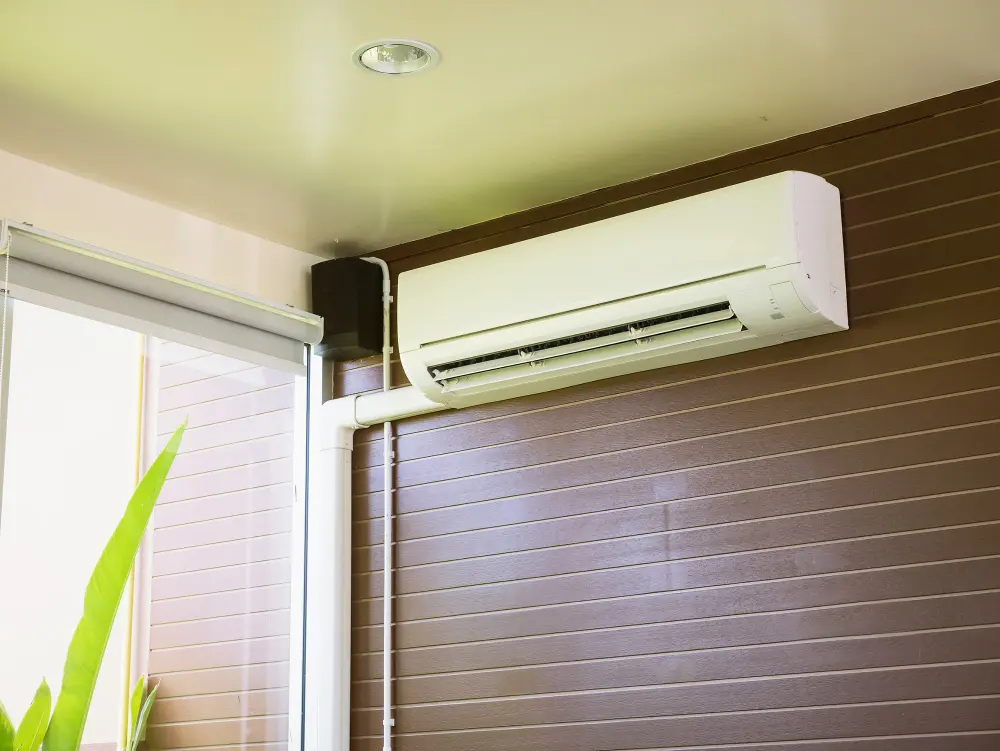
A split system consists of an indoor unit connected to an outdoor unit. The indoor component distributes conditioned air into the room, while the outdoor component releases or absorbs heat as part of the heating or cooling process.
For a smaller workspace, this arrangement can offer several practical advantages:
- Targeted temperature control
- Heating and cooling from one system where supported
- Individual control of the conditioned room
- Relatively straightforward installation compared with some larger systems
- A wide range of indoor unit styles and capacities
- Useful year-round temperature management
The system still needs to be correctly sized and installed. A split system that is too small may struggle during periods of high heat, while an unnecessarily large unit may not provide the most efficient or comfortable operation.
If you are considering a split system for your workspace, JK Cooling Solutions can assess the property and explain which type of installation would make practical sense. Contact our team for tailored guidance before selecting equipment.
When does a split system make commercial sense?
A split system can be particularly useful when a business needs reliable temperature control in one main room or a clearly defined area.
It may suit:
- Small offices
- Retail units
- Reception areas
- Consultation rooms
- Studios
- Treatment rooms
- Home-based business premises
- Small staff areas
The commercial case becomes stronger when the room regularly becomes uncomfortable during warm weather or when the business needs heating as well as cooling.
For example, a workspace with several computers and limited ventilation may experience considerable internal heat. Installing a properly sized system can make the room more comfortable without requiring a larger system for parts of the building that do not need conditioning.
Is a split system suitable for several rooms?
It can be, but a standard single split system is designed to condition one main indoor area.
If several separate rooms need temperature control, a multi-split system may be worth considering. This uses multiple indoor units connected to a shared outdoor unit.
The choice depends on the building layout and how independently the rooms need to be controlled.
For a small office with two enclosed rooms, separate indoor units may provide better control than trying to push air from one room into another. For an open-plan workspace, one appropriately positioned unit may be sufficient.
How is the right split system size determined?
Capacity should be based on the actual cooling and heating requirements of the room.
Room dimensions are important, but an installer may also consider:
| Factor | Why it matters |
| Floor area | Provides a starting point for capacity |
| Ceiling height | Affects the volume of air being conditioned |
| Glazing | Windows can increase solar heat gain |
| Occupancy | People add heat to the room |
| Computers and equipment | Electrical equipment can produce additional heat |
| Sun exposure | Direct sunlight can increase cooling demand |
| Insulation | Influences how easily heat enters or leaves |
| Opening hours | Determines how frequently the system operates |
This is why an air con split system installer Eltham businesses can rely on should assess the premises rather than choosing a unit based purely on a generic room-size recommendation.
What type of property do you have?


Semi-Detached

Detached

Terraced

Bungalow

Flat

Commercial or Small Office
It just takes 60 Seconds
And then you can book a free consultation
What affects the cost of a split system installation?
There is no single installation price that applies to every workspace.
The final cost can be influenced by the equipment selected and the complexity of the installation.
Factors may include:
A straightforward installation in an accessible room may involve less labour than a property where equipment is difficult to access or pipework needs to travel a significant distance.
When researching split system air conditioning cost Eltham businesses should therefore compare complete quotations rather than assuming that the equipment price represents the total project cost.
Does a split system provide heating as well as cooling?
Many modern split systems can provide both.
This is possible because the system can reverse the direction of heat transfer. During cooling, heat is removed from the indoor environment. During heating, the process is reversed so heat can be delivered indoors.
For a business, this can make a split system useful outside the summer months.
However, whether it can provide all the heating a particular workspace requires depends on the property, system specification and operating conditions. It is sensible to discuss heating requirements with the installer before choosing equipment.
If your workspace needs both heating and cooling, speak to JK Cooling Solutions about how a split system could fit into your existing setup. Our team can assess the premises and explain the practical options.
What about running costs?
Running costs depend on how the system is used, its efficiency and the characteristics of the building.
A business that operates air conditioning for long hours will naturally have different energy use from one that only requires occasional cooling.
The way the system is operated can also affect consumption. Keeping doors and windows closed while cooling is running, using sensible temperature settings and keeping filters clean can help avoid unnecessary energy use.
A correctly sized system is important as well. Choosing equipment based solely on maximum capacity is not necessarily the best route to efficient operation.
Businesses should consider expected usage alongside the initial installation price when assessing whether a split system represents good value.
Is a split system less disruptive to install?
A single split system can often involve a relatively straightforward installation compared with larger systems that require extensive ductwork.
However, the amount of work still depends on the property.
The installer may need to:
- Mount the indoor unit
- Position the outdoor unit
- Create an appropriate route between the units
- Install refrigerant pipework and cables
- Provide condensate drainage
- Complete electrical connections where required
- Test and commission the system
Access can have a major effect on the installation process. A system that appears simple from inside the room may become more involved if the outdoor unit is difficult to reach.
Where should the indoor unit be positioned?
The indoor unit should be positioned to provide effective air distribution without creating discomfort.
The installer should consider the location of desks, seating, shelving, counters and other fixtures.
Direct airflow towards people can be unpleasant, particularly where someone sits in the same position for several hours. At the same time, placing the unit where airflow is obstructed can reduce its effectiveness.
Access for cleaning and servicing is also important. The best location is one that balances performance, comfort, appearance and maintenance requirements.
Where can the outdoor unit be installed?
The outdoor unit needs adequate airflow and sufficient space around it.
Its location can be affected by the building’s external layout, available wall or ground space, access and the route for connecting pipework.
It should also remain accessible for maintenance. If servicing requires complicated access every time, routine maintenance may become more difficult.
A professional assessment can identify suitable options before installation begins.
What should businesses look for in a quotation?
A quotation should explain what the business is actually receiving.
Look for details covering:
This makes it easier to compare proposals fairly.
A quotation that appears cheaper may not offer better value if it excludes work that another installer has included.
A typical workspace example
Consider a small Eltham office with an open-plan working area used by six employees. The room has several computers and receives strong afternoon sunlight through large windows.
A split system could potentially provide targeted cooling and heating without installing a full ducted network throughout the property.
The installer would first need to assess the room’s heat load, available wall space and suitable outdoor unit position. If the system is correctly sized and positioned, it could provide a practical solution without unnecessarily conditioning unused areas.
When might a split system not be the best choice?
A split system is not automatically suitable for every commercial property.
A different arrangement may be more appropriate where:
In such cases, a multi-split, ducted or other system configuration may provide a better fit.
Related articles



What type of property do you have?
Semi-Detached
Detached
Terraced
Bungalow
Flat
Commercial or Small Office
At a glance
For a small office, studio, shop or professional workspace, air conditioning does not necessarily need to involve a complicated building-wide system. A split system can provide targeted heating and cooling while allowing a business to control the temperature in the areas where it matters most.
However, choosing a split system should involve more than comparing equipment prices. The building layout, working hours, number of occupants, heat from equipment and available outdoor space can all influence whether the system is a sensible commercial investment.
Understanding how split systems work and what affects their installation can help Eltham business owners decide whether this approach fits their premises.
What is a split system air conditioner?
A split system consists of an indoor unit connected to an outdoor unit. The indoor component distributes conditioned air into the room, while the outdoor component releases or absorbs heat as part of the heating or cooling process.
For a smaller workspace, this arrangement can offer several practical advantages:
- Targeted temperature control
- Heating and cooling from one system where supported
- Individual control of the conditioned room
- Relatively straightforward installation compared with some larger systems
- A wide range of indoor unit styles and capacities
- Useful year-round temperature management
The system still needs to be correctly sized and installed. A split system that is too small may struggle during periods of high heat, while an unnecessarily large unit may not provide the most efficient or comfortable operation.
If you are considering a split system for your workspace, JK Cooling Solutions can assess the property and explain which type of installation would make practical sense. Contact our team for tailored guidance before selecting equipment.
When does a split system make commercial sense?
A split system can be particularly useful when a business needs reliable temperature control in one main room or a clearly defined area.
It may suit:
- Small offices
- Retail units
- Reception areas
- Consultation rooms
- Studios
- Treatment rooms
- Home-based business premises
- Small staff areas
The commercial case becomes stronger when the room regularly becomes uncomfortable during warm weather or when the business needs heating as well as cooling.
For example, a workspace with several computers and limited ventilation may experience considerable internal heat. Installing a properly sized system can make the room more comfortable without requiring a larger system for parts of the building that do not need conditioning.
Is a split system suitable for several rooms?
It can be, but a standard single split system is designed to condition one main indoor area.
If several separate rooms need temperature control, a multi-split system may be worth considering. This uses multiple indoor units connected to a shared outdoor unit.
The choice depends on the building layout and how independently the rooms need to be controlled.
For a small office with two enclosed rooms, separate indoor units may provide better control than trying to push air from one room into another. For an open-plan workspace, one appropriately positioned unit may be sufficient.
How is the right split system size determined?
Capacity should be based on the actual cooling and heating requirements of the room.
Room dimensions are important, but an installer may also consider:
| Factor | Why it matters |
| Floor area | Provides a starting point for capacity |
| Ceiling height | Affects the volume of air being conditioned |
| Glazing | Windows can increase solar heat gain |
| Occupancy | People add heat to the room |
| Computers and equipment | Electrical equipment can produce additional heat |
| Sun exposure | Direct sunlight can increase cooling demand |
| Insulation | Influences how easily heat enters or leaves |
| Opening hours | Determines how frequently the system operates |
This is why an air con split system installer Eltham businesses can rely on should assess the premises rather than choosing a unit based purely on a generic room-size recommendation.
What type of property do you have?
Semi-Detached
Detached
Terraced
Bungalow
Flat
Commercial or Small Office
It just takes 60 Seconds
And then you can book a free consultation
What affects the cost of a split system installation?
There is no single installation price that applies to every workspace.
The final cost can be influenced by the equipment selected and the complexity of the installation.
Factors may include:
A straightforward installation in an accessible room may involve less labour than a property where equipment is difficult to access or pipework needs to travel a significant distance.
When researching split system air conditioning cost Eltham businesses should therefore compare complete quotations rather than assuming that the equipment price represents the total project cost.
Does a split system provide heating as well as cooling?
Many modern split systems can provide both.
This is possible because the system can reverse the direction of heat transfer. During cooling, heat is removed from the indoor environment. During heating, the process is reversed so heat can be delivered indoors.
For a business, this can make a split system useful outside the summer months.
However, whether it can provide all the heating a particular workspace requires depends on the property, system specification and operating conditions. It is sensible to discuss heating requirements with the installer before choosing equipment.
If your workspace needs both heating and cooling, speak to JK Cooling Solutions about how a split system could fit into your existing setup. Our team can assess the premises and explain the practical options.
What about running costs?
Running costs depend on how the system is used, its efficiency and the characteristics of the building.
A business that operates air conditioning for long hours will naturally have different energy use from one that only requires occasional cooling.
The way the system is operated can also affect consumption. Keeping doors and windows closed while cooling is running, using sensible temperature settings and keeping filters clean can help avoid unnecessary energy use.
A correctly sized system is important as well. Choosing equipment based solely on maximum capacity is not necessarily the best route to efficient operation.
Businesses should consider expected usage alongside the initial installation price when assessing whether a split system represents good value.
Is a split system less disruptive to install?
A single split system can often involve a relatively straightforward installation compared with larger systems that require extensive ductwork.
However, the amount of work still depends on the property.
The installer may need to:
- Mount the indoor unit
- Position the outdoor unit
- Create an appropriate route between the units
- Install refrigerant pipework and cables
- Provide condensate drainage
- Complete electrical connections where required
- Test and commission the system
Access can have a major effect on the installation process. A system that appears simple from inside the room may become more involved if the outdoor unit is difficult to reach.
Where should the indoor unit be positioned?
The indoor unit should be positioned to provide effective air distribution without creating discomfort.
The installer should consider the location of desks, seating, shelving, counters and other fixtures.
Direct airflow towards people can be unpleasant, particularly where someone sits in the same position for several hours. At the same time, placing the unit where airflow is obstructed can reduce its effectiveness.
Access for cleaning and servicing is also important. The best location is one that balances performance, comfort, appearance and maintenance requirements.
Where can the outdoor unit be installed?
The outdoor unit needs adequate airflow and sufficient space around it.
Its location can be affected by the building’s external layout, available wall or ground space, access and the route for connecting pipework.
It should also remain accessible for maintenance. If servicing requires complicated access every time, routine maintenance may become more difficult.
A professional assessment can identify suitable options before installation begins.
What should businesses look for in a quotation?
A quotation should explain what the business is actually receiving.
Look for details covering:
This makes it easier to compare proposals fairly.
A quotation that appears cheaper may not offer better value if it excludes work that another installer has included.
A typical workspace example
Consider a small Eltham office with an open-plan working area used by six employees. The room has several computers and receives strong afternoon sunlight through large windows.
A split system could potentially provide targeted cooling and heating without installing a full ducted network throughout the property.
The installer would first need to assess the room’s heat load, available wall space and suitable outdoor unit position. If the system is correctly sized and positioned, it could provide a practical solution without unnecessarily conditioning unused areas.
When might a split system not be the best choice?
A split system is not automatically suitable for every commercial property.
A different arrangement may be more appropriate where:
In such cases, a multi-split, ducted or other system configuration may provide a better fit.
Related articles
What type of property do you have?
Semi-Detached
Detached
Terraced
Bungalow
Flat
Commercial or Small Office